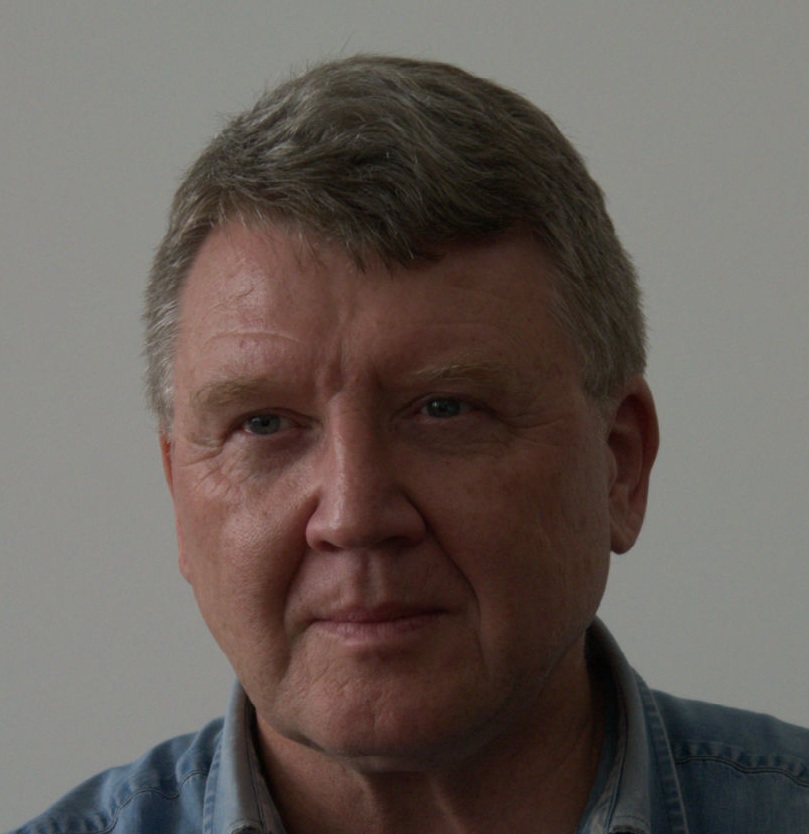
Email: bwhitworth replacethisby@ acm.orgThis site: http://brianwhitworth.com/ is about socio-technical computing
Recent:
1. Socio-technical
System Design: (html link)
2 . The Research Roadmap - Wiki was
bot-hacked so we will have to clean and move to a new site
somewhere.
Background:
Born in Oldham, England but grew up in New Zealand. After seven years at university, joined the NZ Army as an Officer, Psychologist then Computer Analyst. After "retiring", I designed/wrote Forum, a pre-windows social network used for three years at my university, giving me a PhD on how online groups generate agreement. A US. professor from 1999-2005, I now work at Massey University, Albany, Auckland, New Zealand, as with the Internet the "world is flat". I research how human and social requirements "drive" computing technology design and evaluation. The vision is that people and computers are more than people or computers.Experience:
A registered industrial psychologist cross-trained in modern IS:- Academic. 21 primary author refereed journal papers, 8 book sections, 30 conference papers, Associate Chair Graduate Studies, Student Internship Manager, Degree Program Leader, Research Officer.
- Computing: Systems Analyst/Programmer, Standards & Technical Documentation Officer, Staff Officer Operational Computing, Internship Manager, Degree Program Leader, Research Officer.
- Psychology.Senior Army Psychologist (New Zealand), ran Regular Officer Selection Boards (ROSB) assessment centers, psychological tests, task analysis, interviewing, questionnaire design, leadership training, stress management.
- Teaching. 15 years teaching, teacher training, competent with large classes, experience with online learning, including Web-board & Web-CT.
Qualifications:
PhD (MSIS); MA (Hons)(Psych); BSc (Maths); BA (Psych); Army Officer Training; Teacher training.Hobbies:
Everyday motorcycle rider, singing/songwriting, quantum theory dilettante.Research:
Increasingly today’s critical IS/IT problems have a human/social component. The Internet is an emerging socio-technical system where human and social issues are growing in importance, e.g. spam and information overload; spyware and online monitoring; copyright abuse and music copying; distrust of online trade; copyright restrictions and the creative commons; plagiarism and academic cheating; pornography and online sexual predators; viruses, worms and hackers; online fraud and scams; identity theft and phishing, and massive connected databases of private data. The socio-technical gap, between what people want and what technology does, is increasing. These problems need more than technology power. The evolution of human civilization has always involved both social and technical progress. Indeed, it is hard to imagine modern technology without modern society. Yet only recently have we realized that just as a physical system like a bridge has physical requirements, so a social system has social requirements. In the socio-technical view it is time to "civilize" a technologized Internet, to apply social ethics, laws and structures to cyberspace. This means applying concepts like freedom, democracy, legitimacy, transparency and justice. Successful social-technical systems, like Wikipedia and eBay, are those that get the social processes right. The change is from zero-sum gains based on competition to the "non-zero-sum" gains of community cooperation, where people produce more working together. Open research sharing illustrates the power of social synergy. My socio-technical research has four parts:- The social requirements of technical systems:
See The
Social Requirements of Technical Systems,
Chapter 1 in our 2009 Handbook of Research
on Socio-Technical Design and Social Networking Systems.
Aldo de Moor and I began with a 2003
Legitimate by Design paper, updated in 2006 byTowards
a Theory of Online Social Rights. My work on Polite
Computing illustrates a social requirement that will
soon dominate the software industry. Spam occurs when
technology ignores social needs. Already 90% of emails on
the Internet are spam (mostly caught by filters), and
cell-phones, texting, chat etc now also have spam forms. A
2009 Channel
Email paper suggests how socio-technical design can
stop spam. Recent work develops A
Social Environment Model of Socio-technical Performance.
- Socio-technical performance and evaluation: This
began with a 2003
Web of System Performance (WOSP) paper, a follow up 2006 CACM
paper and a 2008
evaluation experiment that compared the
usefulness/usability factors of the TAM model that has
dominated IS/IT thinking for two decades with the WOSP
model's eight factors of: reliability, security,
flexiblity, connectivity, privacy, functionality,
usability and extendibility. My PhD student Karen
Patten and I analyzed flexibility into anticipation, agility
and adaptation, see How CIOS Use
Flexibility to Manage Uncertainty in Dynamic Business
Environments, best practitioner paper AMCIS 2009.
Other work on Measuring
Disagreement gives a measure for group diversity.
- Online group processes. I began
researching online groups before email, the Internet or
Windows, so had to use software I wrote myself. It gave the
Cognitive
Three-Process (C3P) model, where users seek factual
information, personal relations and to belong to a group
identity. Contrary to the media-rich ideas of the time, Generating
agreement in computer-mediated groups showed that
"social" group interaction could be supported online by many-to-many
linkage. Group processes Beyond
Rational Decision Making suggested new online
forms of group interaction like Voting before
discussing. People dont work like computers, as
A
Comparison of Human and Computer Information Processing
showed.
- Online knowledge exchange. The group-to-group communication concept put forward in 2001 anticipated today's community tag clouds, reputation measures and recommender systems - all of which are "lean". Yet it was so hard to publish, as the then convention was that "social" mdeans "media rich". As Google's simple white screen showed, that is wrong. The WOSP model was equally hard to publish. It was editorially rejected by JAIS in 2005 because "papers critical of TAM never pass review." Fortunately, the barons of information systems (IS), whose feudal "religion of rigor" defended their intellectual castles of power, rank and grant money, became largely irrelevant to the future of computing. As Rob Friedman and I argue in the online journal First Monday, creativity is as important as rigor (Reinventing Academic Publishing Online Part I: Rigor, Relevance and Practice and Part II: A Socio-technical Vision). A paper outlining the problems of academic publishing was of course impossible to journal publish (rejected by CAIS 2006, EJIS 2007 and IEEE Transactions on Professional Communication 2008). A Research Publishing Checklist For New Authors argues that research should be open not closed - see also the research roadmap. If democratic cross-disciplinary knowledge exchange does not replace elite specialist knowledge castles, academia will go the way of past aristocracies.
Technology support for people illustrates some well publicized movie scenarios:
- Humanized technology - machines that become like or better than people, e.g. the Terminator, IBM's Deep Blue, AI the movie.
- Technologized humanity - People become cogs in a mechanical system, from William Blake's Urizon to The Matrix movie.
- Human-technology hybrids - A computer add-on takes over, e.g. Star Trek's Captain Picard taken over by the Borgs, Star Wars Darth Vader
Are"connected" people, plugged into their cell-phones, in fact "disconnected" (from the world)? If distracted drivers on cell-phones crash and die, which connection has priority? In socio-technical theory, people have to control technology because the other way around doesn't work!