Quantum Realism Part I. The Observed Reality
Chapter 5. The Quantum Field
Brian Whitworth, New Zealand
“In questions of science, the authority of a thousand is not worth the humble reasoning of a single individual.” (Galileo Galilei)
The last chapter replaced three fields and twelve virtual particles of the standard model with one core quantum process running on the network of space that explained space, light, matter, anti-matter, nuclear bonds, and neutron decay (4.5.8). This chapter goes further, to replace the fields of gravity, electricity, and magnetism with one quantum field in space, so all the forces of nature have one source.
The founders of quantum theory saw the quantum field as a network of points, each oscillating like a mass on a spring in three directions outside space (Figure 5.1). Schrödinger based quantum mechanics on this model of quantum harmonic oscillators, but physical objects can’t vibrate in a non-physical direction, so the quantum field concept was rejected.
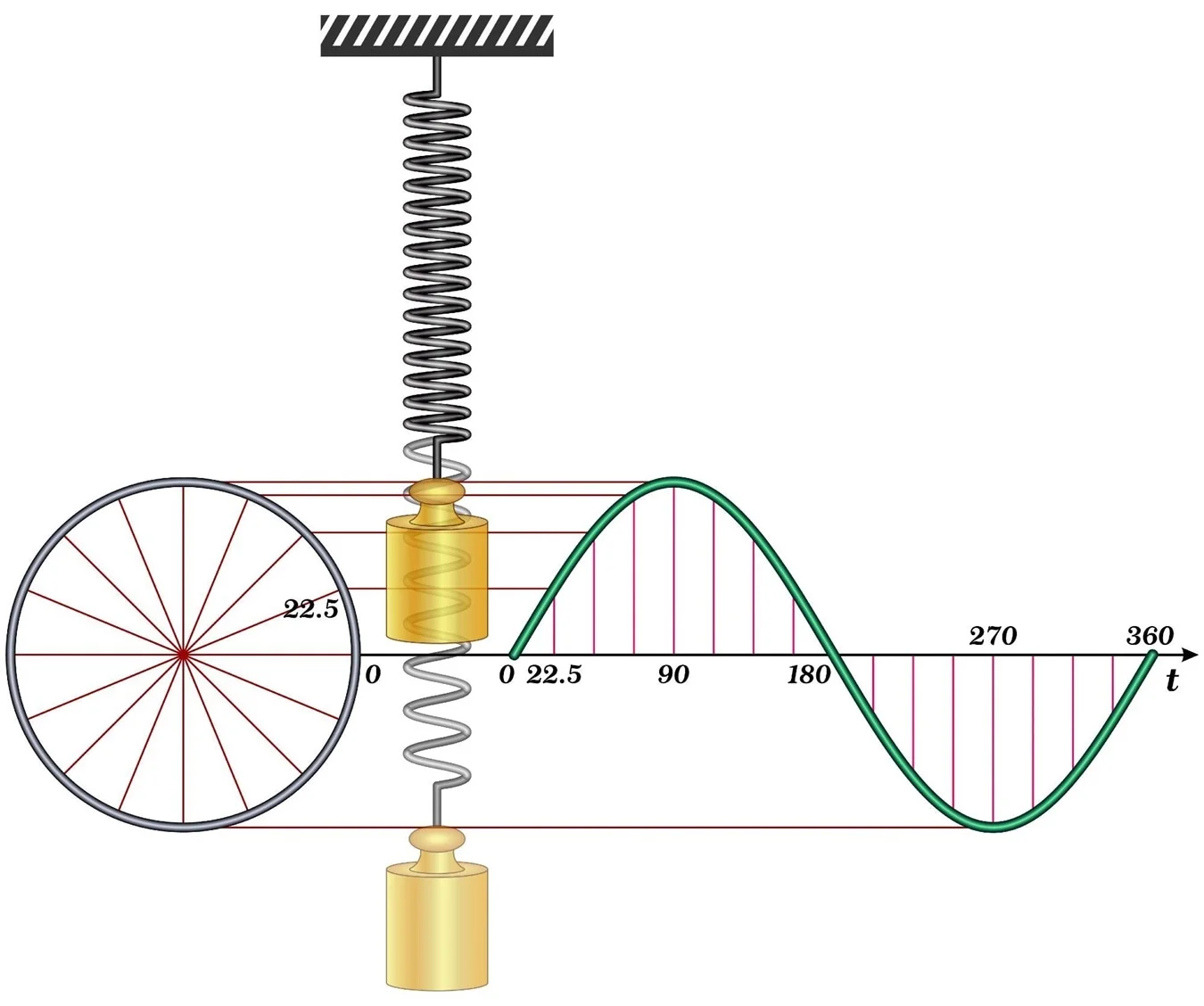
However in quantum realism, Schrödinger’s oscillations are the quantum events behind the physical events we see. The quantum field then arises when the network of space supports waves of light and lumps of matter, by vibrations that occur:
1. Outside space. Light vibrates on space (3.2.2).
2. On a surface. Space is a 3D surface (2.4.1).
3. As values. Set by one core process (3.2.3).
4. On a network. Space is a network (2.1.5).
5. To cause physical events. The strength of the quantum field at each point is the probability that a physical event will occur there (3.9.3).
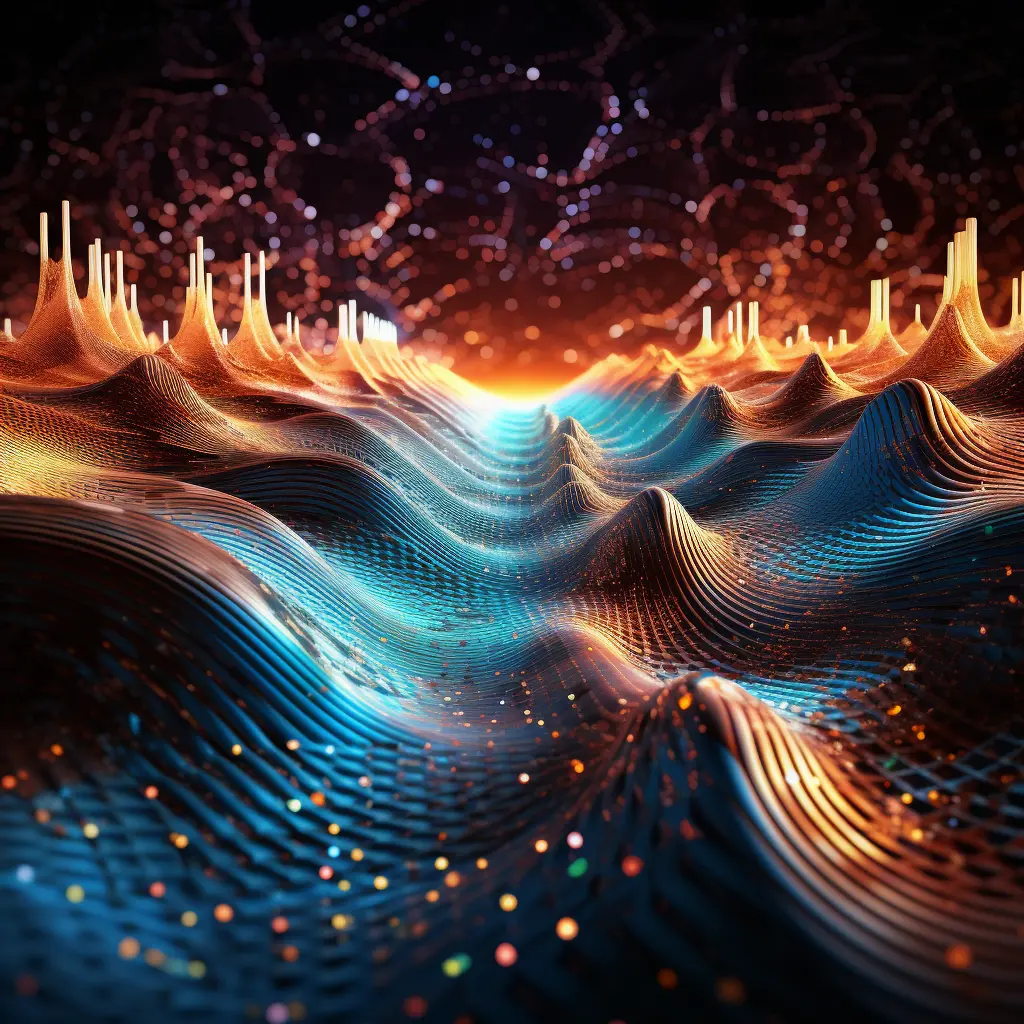
Figure 5.2 envisages the quantum field as the vibrating surface that causes our physical world. Note that the picture shows a two-dimensional surface, but the quantum field fills three-dimensional space and sets values in a non-physical fourth dimension.
QR5.1. Gravity Rules
QR5.2. Special Relativity
QR5.3. How Does Matter Move?
QR5.4. General Relativity
QR5.5. Electricity and Magnetism
QR5.6. Order and Disorder
QR5.7. Why Does Anything Exist?